A playful exploration of gender and transformation with a beloved classic


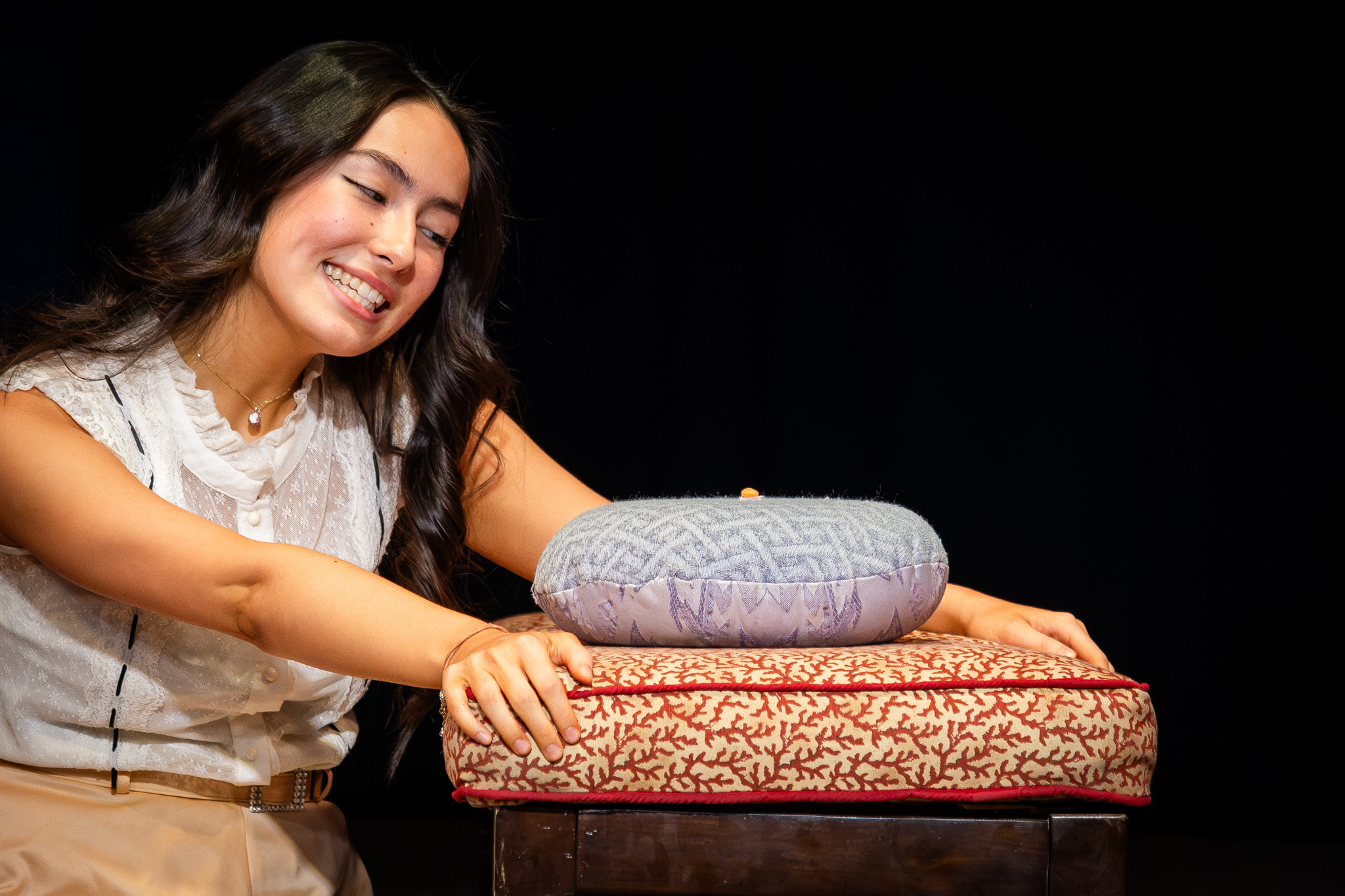
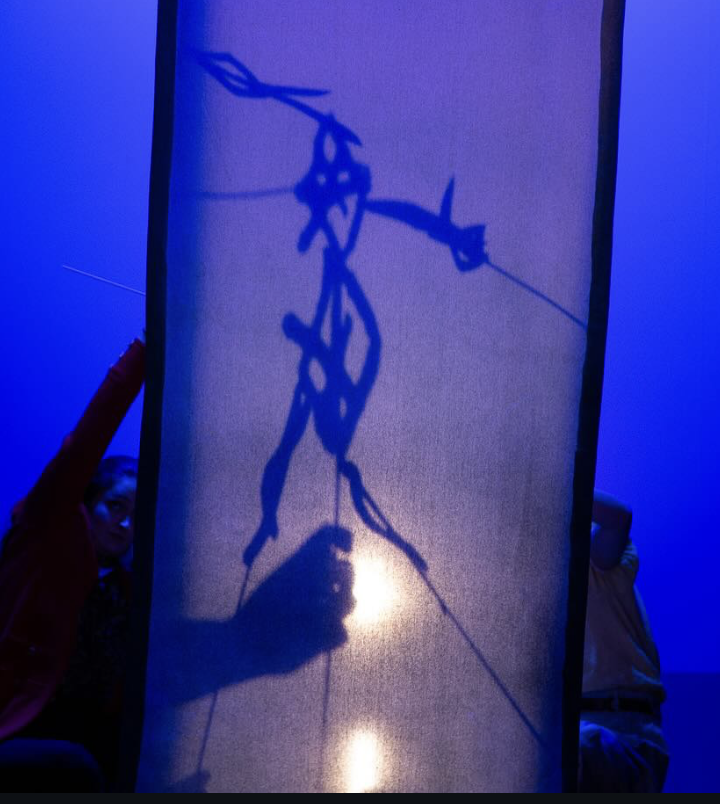
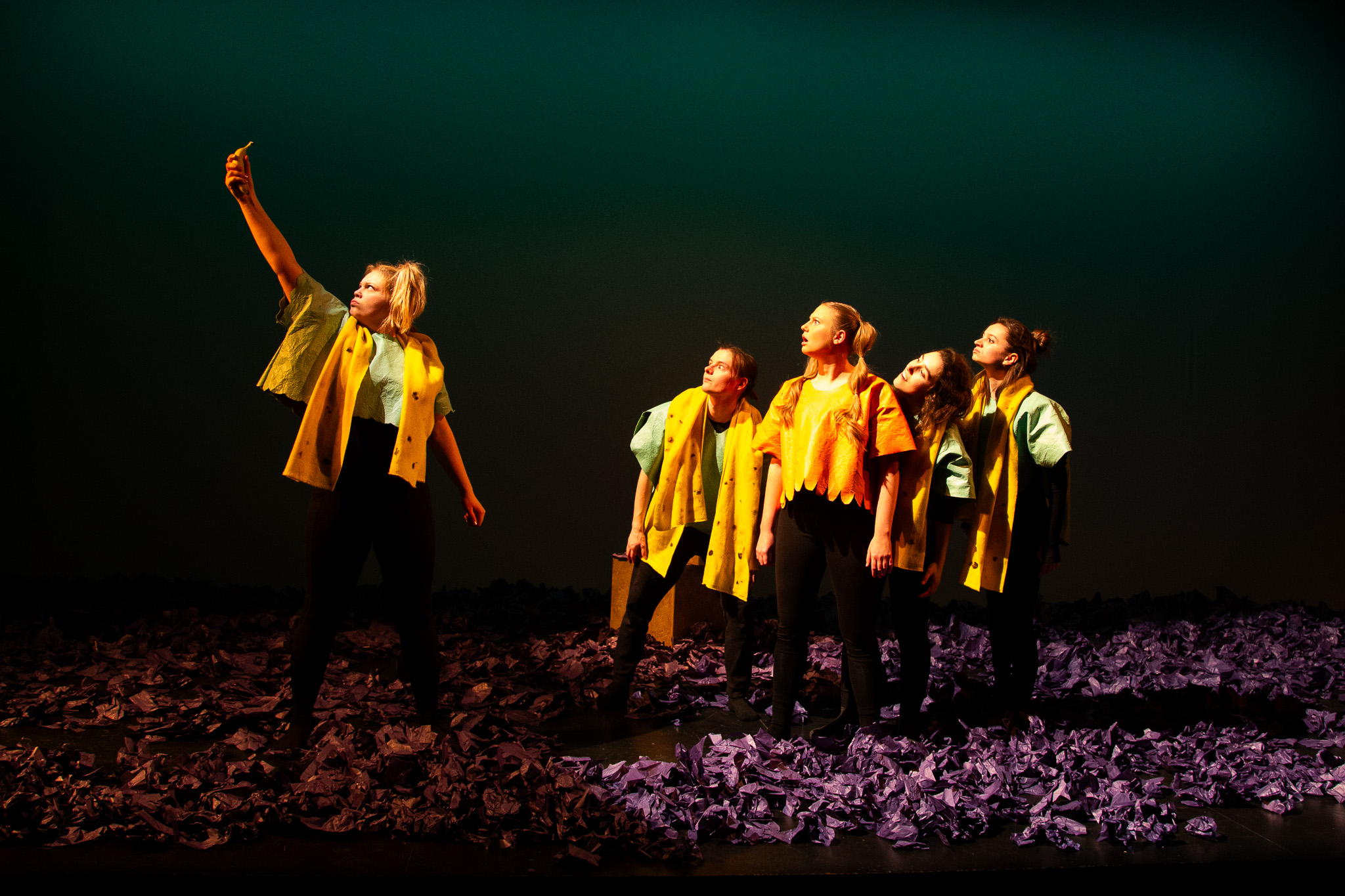
A visionary version of My Fair Lady directed by Kelsey Robins allowed the creative team to tackle the classic under a new lens. Casting the entire show with performers assigned female at birth, the score was aligned to the cast of eight’s talents. This meant that the show’s world was altered to a new set of rules that dictated our performance and design elements. The result was a ruckus ride with transforming hats, flying costumes, and belly laughs.
My Fair Lady
A Penn State Centre Stage Production
Book and Lyrics by Alan Jay Lerner
Music by Frederick Loewe
Director: Kelsey Robins
Scenic Designer: Marta Siverio
Lighting Designer: PJ Jobson
Sound Designer: Anna Ross
Costume Designer: Chelsea Ann
Technical Director: Chris Russo
Production Stage Manager: Jenny Lang
Props Supervisor: Jay Lasnik
Logistics
Our goal was to make a piece that explored the gender norms presented in the original in a space that felt like elevated rehearsal room. Base costumes represented our actors, with additional pieces filling in the gaps of their different characters. Nearly all changes occurred before the audience using preset items. We leaned into low-fuss options to allow the performance to continue. The audience was gleefully in on the joke.
The result was a dynamic piece list that required extensive tracking alongside our incredible stage management team.
Draping A Ballgown Look

To fit the guidelines of the show, Eliza’s ballgown needed to be a layer quickly added to her base costume. To achieve this look, we used a scarf and a sash to create what was effectively a vest that attached with three hooks at the performer’s side. This drape was painstakingly hand sewn together in several iterations by Amanda Ferg with inputs from Laura Robinson. The result was etherial, yet simple, and allowed the lighting designer to play with the beautiful sheen of the scarf.
“Propstumes” and Onstage Transformation
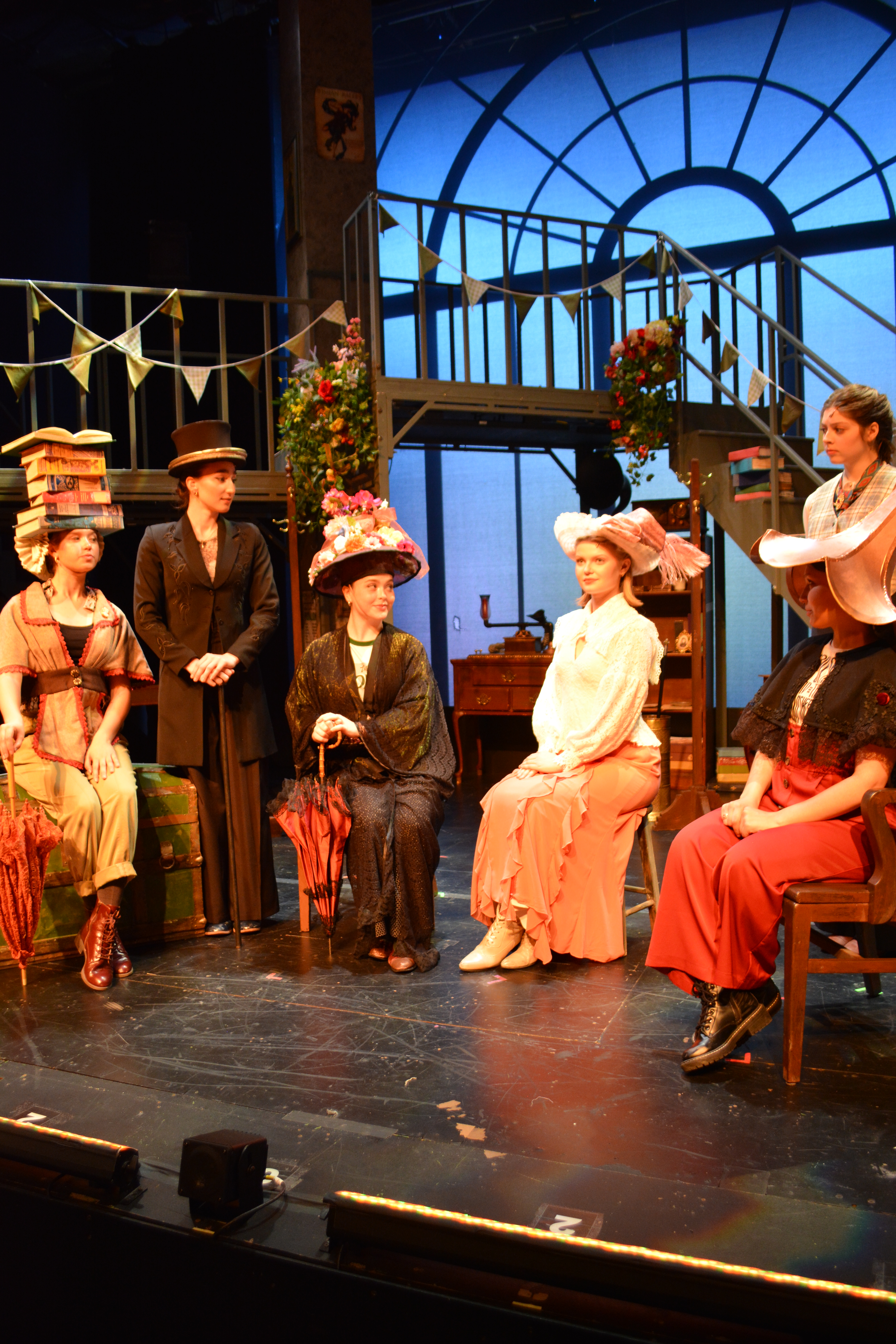
To transition to the Royal Ascot, hats were inspired by props needed for the show, and built custom for the production. The results were incredible. A birdcage was pulled down and placed on the head of Colonel Pickering. A stacks of books with cheeky page to “fluff” and turn was pulled from the shelf. A framed portrait was pulled from the wall and popped open to reveal a top hat. The gramophone was dismantled for a delightful gag, and a flower girl’s basket was flipped down to expose an extravagant floral hat fit for the Ascot.
Our cheeky approach brought challenges for weight and balance, but with some engineering, we were able to create the items with unexpected happy accidents. The gramophone had a delightful auditory component that kept our audience giggling.


Books that tell a story within a story
Each title for the carefully crafted “Book Hat” was selected as a special call out to the story.

“Gloriana; or, the revolution of 1900” by Lady Florence Dixie
“Gloriana tells the story of Gloria de Lara, a highly intelligent and enterprising young woman who, upon realizing that girls and women are mistreated, disguises herself as a man named Hector d’Estrange in order to attend Eton and Oxford. Later, she becomes a Member of Parliament. Gloria/Hector leads a revolutionary women’s movement called the Woman’s Volunteer Company, who get into violent confrontations with authorities. Meanwhile, Hector is falsely accused of murder, outed as a cross-dresser, and goes into hiding. Ultimately, Gloria’s campaign prevails and she becomes a hero. The novel ends with people fondly looking back at her in the year 1999, believing Gloria to be the hero of their now utopian, peaceful, and egalitarian society. Unlike other contemporary feminist utopian novels, Gloriana addresses the difficult work, lives lost, and cunning planning required to execute a radical feminist vision.”
“The Domestic Blunders of Women” by A Mere Man
“Published in 1900, a satire making fun of women for being incapable of managing homes rather than naturally inclined to it. It blames the fact that there is no real training for this and depends on “old wives’ tales”. The book was met with women defending their abilities.”
“Spoken Sanskrit” by Colonel Hugh Pickering
As referenced in the script
“Higgins’ Universal Alphabet” by Professor Henry Higgins
As referenced in the script
“English Words as Spoken and Written” by James A. Bowen
Published in 1900, this would have been the standard for English phonetic education at the time. Likely a competitor to our fictional Professor Higgins.
Hat Made by Sam Gates